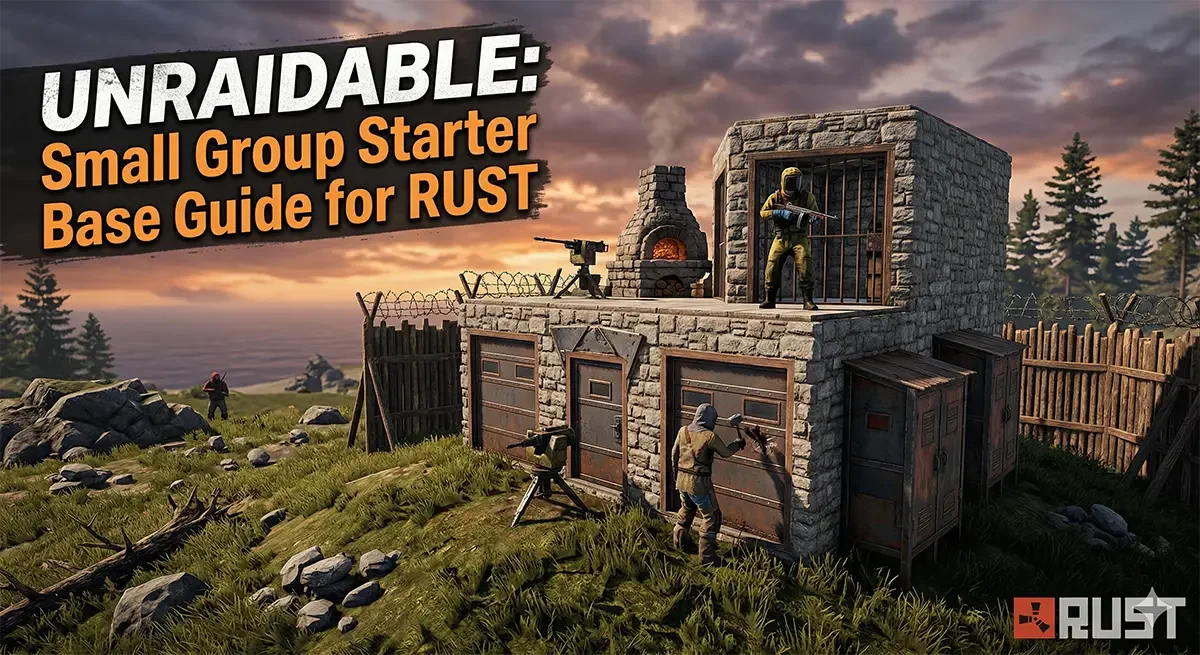
Let us get one harsh reality out of the way immediately: in Rust, the truly “unraidable” base is a myth. If a 10-man clan decides they want your loot and they have boxes of rockets, your base is going down.
However, on Wipe Day, you are not fighting massive zerg clans. You are fighting other solos, duos, and trios who are carefully calculating their sulfur. The goal of a starter base is not to be invincible; your goal is to make raiding you mathematically unprofitable. You want the raiders to spend more sulfur blowing through your walls than they will ever get back from your Tool Cupboard (TC).
If you are playing in a small group, here are the most efficient, frustrating-to-raid starter base designs to keep your loot secure overnight.
1. The Honeycombed 2×2 (The Unbreakable Classic)
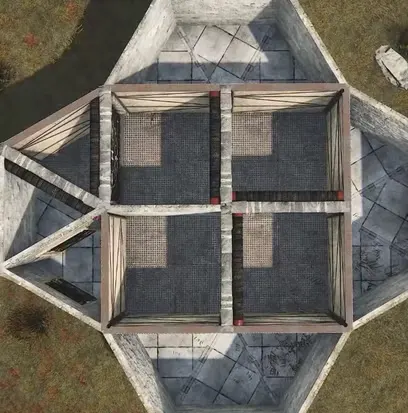
A standard 2×2 square is the most common starter base in the game, which makes it predictable. But with a few immediate modifications, it becomes a nightmare for early-game raiders wielding satchel charges.
- The Build: Start with a simple 2×2 core. Before you log off, surround the entire perimeter with a layer of triangle foundations and walls (honeycombing). Cap the top with a half-wall layer for a roof honeycomb.
- The Strategy: Raiders usually look for the cheapest path to the TC. A raw 2×2 is cheap to blow through. A honeycombed 2×2 forces raiders to guess where your doors are or blow blindly through multiple layers of stone (or sheet metal).
- The Upgrade Path: Upgrade your core 2×2 to sheet metal as soon as your furnaces are running, leaving the outside honeycomb as stone. This masks the true strength of your base, tricking raiders into thinking it will be an easy, cheap hit.
2. The Offset Bunker (The Solo/Duo Vault)
Bunker bases utilize Rust‘s building mechanics to temporarily seal off the core of the base with solid walls or roofs without needing doors.
- The Build: While there are many variations, the roof stability bunker is the most reliable for a starter. You use a raised foundation and a low roof tile to create a seal over your loot room. When you want to leave, you break a specific twig half-wall that supports the roof tile, causing the “bunker” to open. Before logging off, you place the twig and the roof tile back down, sealing it shut.
- The Strategy: Doors are the weakest point of any base. A standard sheet metal door takes 4 satchel charges to destroy. A solid sheet metal wall takes 16. By sealing your core with a bunker mechanic, you force raiders to blow through pure walls to get your loot.
- The Advantage: Most small groups farming sulfur on day one simply do not have enough explosives to crack a sheet metal bunker. They will blow through your airlock, see the sealed bunker, and walk away.
3. The 2×1 Expander (The Aggressive Start)
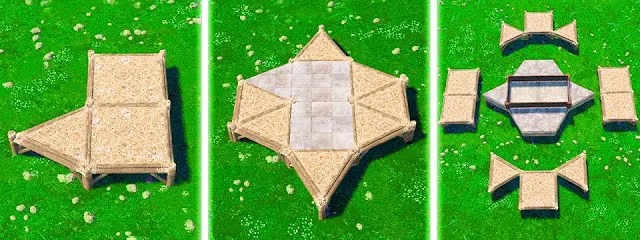
If your group prioritizes getting monuments and PvP over building, you need a base that goes up in three minutes but can securely expand later.
- The Build: Start with a 1×2 footprint. Place your TC in the back square, and use the front square as a dedicated airlock with two doors swinging outward. As your group farms more resources, you expand the front by adding more 1×1 modules, creating a long, heavily door-path-protected hallway.
- The Strategy: This base focuses entirely on door pathing. By adding garage doors as you expand, you create a winding path where raiders have to destroy 5 to 7 doors just to reach the back room.
- Split the Loot: Never put all your sulfur and scrap in the TC room. Use the expanded hallway sections to hide drop boxes or small stashes under hidden floor grilles. Even if raiders reach the TC, they miss half your wealth.
Crucial Defensive Principles for Any Starter
No matter which footprint you choose, failing to follow these basic rules will get you raided:
- The Airlock is Mandatory: Never have a single door leading outside. Always have a triangle foundation with two doors. Ensure they swing open into each other, creating a block so door-campers cannot run inside if they kill you.
- Key Locks for Solos, Code Locks for Groups: If you are solo, only use Key Locks. You do not need to craft a key; you can lock and unlock it automatically. If you use a Code Lock as a solo, it signals to everyone outside that you have a team, making you a bigger target.
- Upgrade Frames First: A sheet metal double door is useless if the wall frame holding it is still made of wood or stone. Raiders will just blow the frame.
Survive the Raid, Not Just the Wipe
You can design the most perfectly honeycombed bunker base in Rust, but it will not save you if your server freezes during an online raid defense.
Rust is notorious for server-side lag on Wipe Day. When massive clans are building giant compounds and hundreds of players are engaging in PvP, cheap shared hosting servers buckle under the entity count. If your server stutters while you are spraying an AK-47 at raiders in your airlock, you lose your base.
East Gate Hosting provides the uncompromised dedicated power needed to survive Thursday wipes.
- Extreme-Frequency Processors: We deliver the raw single-core speed required to instantly calculate complex projectile ballistics and entity updates, keeping your server FPS high during intense base defenses.
- Instant NVMe Storage: Fast storage prevents massive lag spikes when the server performs its automated world-saves.
- Centralized European Infrastructure: Located in Falkenstein, Germany, our enterprise-grade network ensures your entire group gets low ping and perfect hit registration.
Stop losing your loot to rubberbanding. Launch your dedicated Rust server with East Gate Hosting today, build your bunker, and dominate the wipe.